
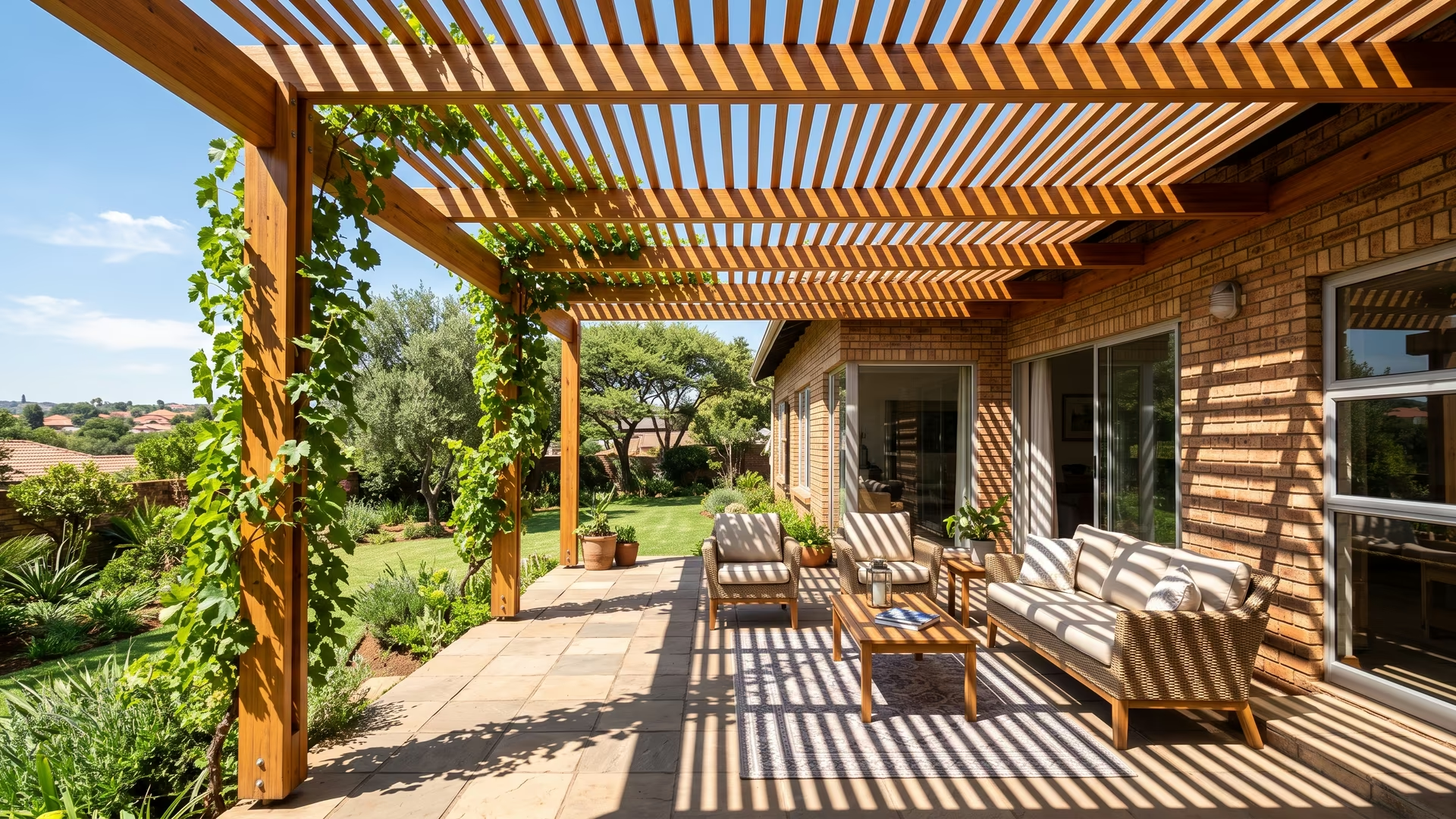
What a pergola actually does
A pergola is an open or slatted frame. It breaks the sun into dappled shade, drops the temperature underneath by a useful margin on a 32-degree Pretoria afternoon, and carries a climber or a shade sail if more is wanted later. It does not keep rain out, and it does not stop hail. Where the brief is a room that works in any weather, the structure needed is a solid roof - a covered patio - and that is a different build at a different price.
The choice is genuinely between the two, not a matter of budget. A pergola over a braai keeps the space light and lets smoke out. A solid roof over the same braai traps it unless a proper opening is designed in.
Frames: timber, steel, aluminium
| Frame | Look | Maintenance | Supplied & installed |
|---|---|---|---|
| Laminated timber | Warm, traditional, suits face brick and thatch | Seal every 2–3 years in Pretoria UV | R12,000 – R30,000 |
| Galvanised steel | Slim sections, longer clear spans | None beyond a wash | R12,000 – R28,000 |
| Powder-coated aluminium | Modern, set colour, no rust | None | About 1.5× steel |
Timber is the most-asked-for finish in the older suburbs, and it is also the one Pretoria sun is hardest on - an unsealed beam greys and checks within two summers here, faster than in Johannesburg or Cape Town.
When a pergola is the wrong answer
A pergola filters sun; it does not shed rain, and that is the line to test before choosing one. Aluminium blades rotate from fully open, for dappled light and air, to fully closed and overlapping, which sheds rain into a built-in gutter in the beam. Blades are turned by hand on a crank or by a motor. It costs several times a fixed timber pergola, and the reason people fit it in Pretoria is specifically the summer pattern of a hot clear day followed by a late-afternoon storm - open all day, closed in twenty seconds when the cloud comes over.
Where a pergola goes
Against the house over a patio door, freestanding over a seating area or a braai, or over a walkway between the house and a carport. Sizes are quoted on the covered area rather than a standard footprint, because unlike a carport there is no vehicle setting the dimensions - a 3m x 4m frame over a table and six chairs is the smallest that reads as a room, and 4m x 6m is the common back-patio size.
KB builds pergolas across all six Tshwane areas it covers: Pretoria East and the estates, Centurion, Pretoria North and the Moot, Akasia, Soshanguve and the far north, Pretoria West, Atteridgeville and Laudium, Mamelodi, Silverton and the eastern belt, Cullinan, Bronkhorstspruit and the eastern plots.
Approval and structure
An open pergola attached to the house is usually treated more lightly by the municipality than a roofed structure, but attaching anything to a wall makes it part of the building, and an estate or body corporate will still want to see it. The rules are set out under council approval in Pretoria. A freestanding pergola on an exposed stand needs cast footings rather than surface plates - an open frame catches wind in a way a person does not expect until it moves.
Pergolas use the same crews, steel and site visit as carports in Pretoria, which is why the two are quoted together.
Pergola questions
How much does a pergola cost in Pretoria?
R12,000 to R30,000 supplied and installed for a timber or galvanised steel open frame, with aluminium about 1.5 times steel. The figure follows the area covered and the span between posts.
Does a pergola keep the rain off?
No. A pergola filters sun and carries a climber or a shade sail, but rain goes straight through. For a space that has to stay dry, a covered patio with a solid roof is the structure.
Wooden or aluminium pergola for Pretoria?
Timber for looks against face brick and older architecture, aluminium where nobody wants to maintain it. Pretoria's UV is hard on unsealed timber - a beam that is not resealed every two to three years greys and checks noticeably faster here than on the coast.
Can a pergola be added to an existing patio?
Yes. A pergola bolts to the house wall on one side and stands on posts on the other, so an existing paved patio takes one without being lifted, provided the paving is sound where the posts land.